Andrew Huberman — sleep, focus & hormone-support stack
The neuroscientist-podcaster’s reported personal stack — a sleep "cocktail," cycled cognition aids, and a testosterone-support pair (tongkat ali + fadogia). Documented as reported, not endorsed; several items he frames as experimental or cycled.
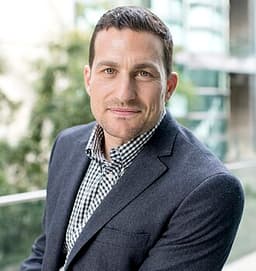
Andrew David Huberman is an American neuroscientist and podcaster . He is an associate professor of neurobiology and ophthalmology at the Stanford University School of Medicine.
Photo: Jamesbrianbounds / CC BY-SA 4.0, via Wikimedia Commons
Aimed at (inferred from 16 mapped members)
Evidence makeup
Core
Sleep onset/depth (threonate for brain penetrance) — his "sleep cocktail."
Emerging 4.8~145 mg · before bedCalming/GABAergic; he cautions it can suppress estrogen.
Emerging 4.050 mg · before bedAlpha-wave calm (skips it if vivid dreams).
Moderate 6.0100–300 mg · before bedFree testosterone (lowers SHBG); says he does not cycle it.
Moderate 6.0400 mg · morningMood/cognition (emphasizes EPA content).
Strong 9.0~1–2 g EPABaseline status; paired with K2.
Moderate 7.5~5000 IUDirects calcium to bone, paired with D3.
Moderate 6.0no dose infoCognition and performance.
Strong 9.55 g
Situational
Improved sleep depth (self-described experiment).
Moderate 7.0900 mg, ~every 3rd night · before bedOccasional stronger sleep support.
Moderate 6.52 g, ~every 3rd–4th night · before bedSedation, paired with glycine.
Emerging 4.0100 mg, ~every 3rd–4th night · before bedLH-mimic; he flags thin human-safety data and toxicity at higher doses.
Emerging 2.5400–600 mg, cycled 8–12 wksAcetylcholine for focus/workouts.
Moderate 7.0300–600 mg, ≤3–5×/wkDopamine precursor for deadlines (notes a crash after).
Moderate 6.0~500 mg, ≤1×/wkAdaptogen for fatigue/endurance.
Moderate 5.5~100 mg, pre-workoutCortisol during stress; cycles off to avoid blunting.
Moderate 7.5~300 mg, cycled (short bursts)
“no dose info” = publicly known to take it, but no reliable dose has been stated.
“Start” adds the 16 evidence-graded compounds to your own stack to edit — gated research compounds excluded. Not an endorsement.